
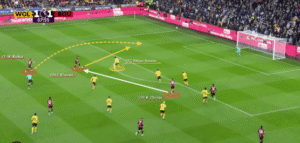
Some of the most misunderstood teams in the 2021/22 Premier League were those that defended deep and relied on counter-attacks. While they often conceded possession and territory, their structure allowed them to compete effectively against stronger opponents. For bettors, these teams created opportunities where market expectations did not fully reflect their tactical efficiency.
Why deep defensive systems create pricing inefficiencies
Teams that sit deep are often perceived as weaker because they do not dominate possession. The cause is visual bias toward attacking football, the outcome is undervaluation of defensive resilience, and the impact is favorable odds for teams capable of disrupting stronger opponents.
What defines a deep-block counter-attacking team
These teams are built around discipline, spacing, and transition efficiency rather than sustained attacking pressure.
Before identifying traits, it is important to understand that their strength lies in structure rather than volume.
- Compact defensive shape close to their own penalty area.
- Low defensive line reducing space behind.
- Quick transitions immediately after regaining possession.
- Focus on efficiency rather than chance quantity.
These characteristics create a system where fewer chances can still produce meaningful outcomes. The interpretation ensures that bettors evaluate effectiveness rather than dominance.
Teams that executed this style effectively
During the 2021/22 season, several teams used deep defensive structures to remain competitive.
Efficiency over control
Burnley and Crystal Palace often relied on compact defending combined with direct transitions. Their approach allowed them to absorb pressure and create selective but dangerous opportunities.
The key insight is that these teams did not aim to control matches—they aimed to control risk.
How counter-attacking shapes match dynamics
Matches involving deep-block teams tend to follow predictable patterns, especially against possession-heavy opponents.
Absorption and release mechanism
The defending team absorbs pressure, forcing the opponent into wide or low-quality areas. Once possession is regained, quick vertical passes exploit the space left behind.
The mechanism is contrast between slow buildup and sudden acceleration, creating asymmetrical opportunities.
Identifying strong counter-attacking setups
A data-driven approach helps confirm whether a team’s defensive style translates into effective transitions.
Before listing them, consider that efficiency is more important than volume.
- Low possession combined with meaningful xG output.
- High percentage of chances created from fast breaks.
- Opponents producing high shot volume but low shot quality.
- Consistent defensive shape across matches.
These indicators reveal whether the system is functioning effectively. The interpretation ensures that analysis focuses on outcomes rather than appearances.
When this strategy loses effectiveness
Deep defensive systems are not universally effective. Certain match conditions reduce their impact.
Situations that weaken counter-attacking teams
Understanding these helps avoid incorrect assumptions.
- Facing teams that also play cautiously.
- Opponents with strong set-piece threats.
- Matches where early goals disrupt defensive structure.
- Lack of pace or quality in transition players.
These factors limit the ability to execute counter-attacks. The impact is reduced efficiency and fewer scoring opportunities.
Translating defensive styles into betting strategy
Applying this concept requires aligning tactical understanding with market context.
Scenario | Match Context | Betting Approach
Deep block vs possession team | Controlled defense | Underdog or handicap value
Two defensive teams | Low tempo | Under goals
Early goal conceded | Structure broken | Avoid
Strong transition vs high line | Space exploitation | Value opportunity
This framework connects tactical insight with decision-making. The interpretation ensures disciplined application.
How markets undervalue defensive structure
Markets often prioritize attacking metrics and recent results, overlooking defensive consistency.
In certain match observations, when evaluating odds through a betting platform connected to ufa168 เข้าสู่ระบบ, deep-defending teams may be priced as clear underdogs despite having tactical setups that limit opponent effectiveness. The implication is that understanding defensive structure can reveal hidden value.
Comparing counter-attacking with probability models
Counter-attacking teams operate on selective efficiency rather than volume, which creates a different probability structure.
A similar principle appears in a casino online environment, where fewer events can still produce meaningful outcomes if probabilities align correctly. In football, efficiency replaces frequency.
Building consistency in reading defensive teams
Consistency requires tracking how teams maintain shape and execute transitions across different opponents. Bettors who understand these patterns can better anticipate when defensive strategies will succeed.
The cause is structured observation, the outcome is improved recognition of value situations, and the impact is more accurate betting decisions.
Summary
Deep-defending counter-attacking teams in the 2021/22 Premier League created opportunities for bettors by exploiting tactical mismatches and market bias. By focusing on structure, efficiency, and match context, it becomes possible to identify when these teams offer genuine value despite limited possession.